
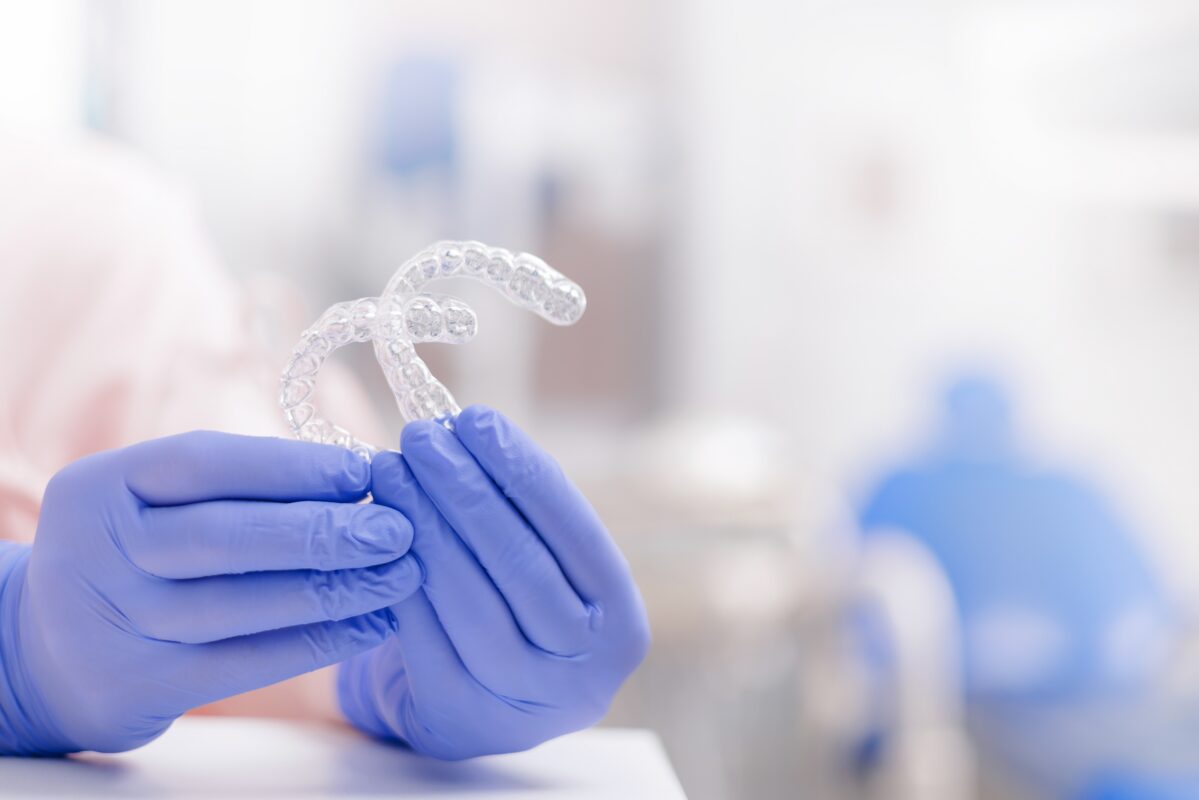
Clear aligners vs. braces: which is best for your smile? Both can straighten teeth, but they differ in how they look, how you care for them, and what they require each day. Dr. Keider offers Glidewell™ Clear Aligners: Powered by ProMonitoring™, for patients who want a discreet, removable option. Clear aligners can work well for many mild-to-moderate alignment and bite concerns, provided you wear them as directed, typically 22 hours a day. Braces may be a better choice for certain complex cases or if you would rather have an option that stays in place.
Dr. Keider is a Winston-Salem dentist who takes time to explain your options. At a consultation, he can assess your teeth, discuss whether Glidewell™ Clear Aligners are right for you, and help you plan for a beautiful, confident smile.
Clear Aligners vs. Braces: Breaking Down Key Differences
You probably know about traditional metal braces. Clear aligners use a different approach, using a series of removable plastic trays to gradually move your teeth. Still, whether braces or clear aligners work best for you depends on what matters most in your situation. Here’s how they compare:
| What matters to you | Clear Aligners | Braces |
|---|---|---|
| Appearance | Clear, less noticeable trays | Visible brackets; tooth-colored options may be available |
| Eating and cleaning | Remove trays for meals and brushing | Stay on; require extra cleaning and some food precautions |
| Daily responsibility | Must wear trays as prescribed | No trays to remember |
| Treatment fit | Depends on the movements needed | Can treat a broad range of problems |
Understanding the Benefits of Clear Aligners
 The advantages of clear aligners are quite obvious. Patients enjoy the transparent, less noticeable trays when the thought of visible braces might feel intimidating. This makes clear aligners especially popular among adults and teens who want to feel more confident wearing a subtle alternative to traditional braces at work or school.
Plus, the aligners are removable, which makes eating and oral hygiene much easier. You don’t have to worry about a restrictive diet or avoiding certain foods. Simply take out the trays and enjoy whatever you’d like.
Patients remove aligners for meals, brush before putting them back in, and wear them for the prescribed number of hours each day. Dr. Keider suggests that to move your teeth as planned, you’ll need to wear the clear aligner trays for 22 hours a day.
Beyond aesthetics, clear aligners tend to feel more comfortable than braces. Traditional braces’ brackets and wires are bulky and can irritate the inside of the mouth, causing soreness or even small cuts on the lips, cheeks, and tongue. Patients tend to find that the smooth, clear trays feel more natural in the mouth.
Still, with clear aligners, you may notice some pressure, especially when switching to a new tray in the set, but it usually resolves within a few days.
When Braces Might Be a Better Alternative
While there are notable benefits to clear aligners, they’re not always the best fit for your orthodontic needs.
Clear aligner treatment continues to evolve to address more complex bite and alignment issues. However, for the most complex bite issues and tooth movements, a traditional orthodontic approach may be best. When Dr. Keider sees your smile at a consultation, he can explain if your situation warrants braces instead of clear aligners.
Moreover, the removable nature of clear aligners comes with a different set of responsibilities. Patients need to wear aligners consistently, keep track of them when removed, and follow instructions for changing sets.
If you have difficulty keeping clear aligners in for the required time, it may extend your treatment timeline. Traditional, non-removable braces eliminate the need to remember the correct wearing directions altogether, staying in place and keeping you on track. Keep in mind, you still have responsibilities with braces. You need to keep them clean and maintain regular visits for adjustments.
Explore Clear Aligners vs. Braces at an Affordable Consultation
Both clear aligners and braces serve a meaningful purpose. But the best orthodontic treatment depends on your preferences and needs. Dr. Keider is happy to explore the benefits of clear aligners vs. braces for your smile. He offers Glidewell™ Clear Aligners. If clear aligners aren’t right for you, he can refer you to an orthodontist to explore braces.
Book an affordable consultation to learn more.